
IN SHORT
- A male cat straining with little or no urine is an emergency — go to a vet now.
- Start with one box per cat plus one, uncovered, unscented, and large enough to turn around in.
- Scoop daily, wash weekly, and never punish a cat for missing — punishment makes the box more aversive.
A male cat straining to urinate, producing no urine, crying in the box, or grooming the genital area needs emergency care — urethral obstruction can be fatal within days. Blood, pain or sudden house-soiling also need a vet.
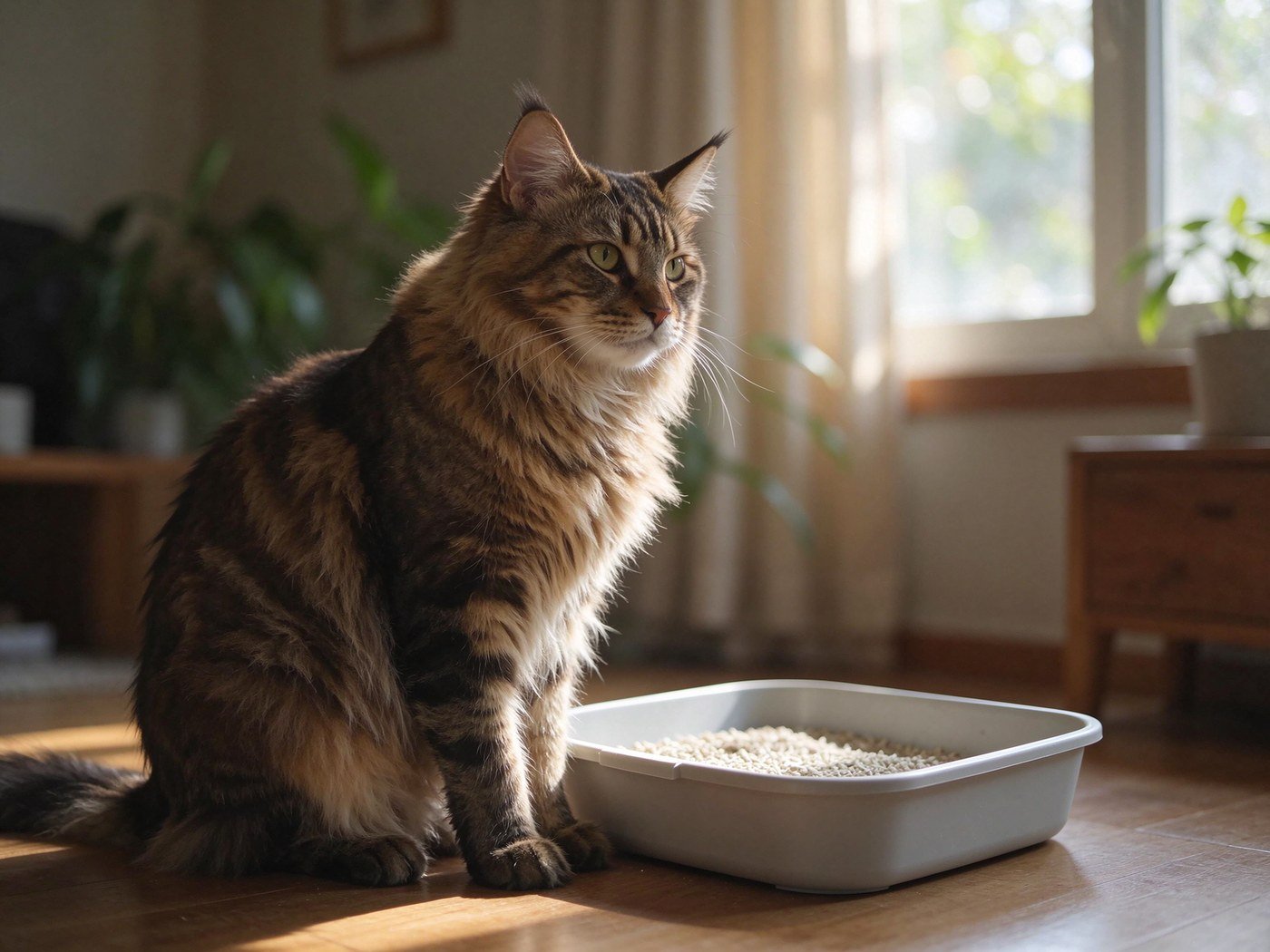
1. Rule out a medical cause first
Before changing litter or moving furniture, check whether the cat can urinate at all. A male cat that crouches repeatedly, strains, licks the genitals, cries or produces only a few drops may have a urethral obstruction. This is a veterinary emergency; waiting until morning can be fatal.
Other medical patterns worth a visit:
- Blood in the urine, or urinating in many small amounts around the house.
- Urinating outside the box but never appearing to strain — pain can still be the cause.
- Increased thirst and urine volume, especially in an older cat — kidney disease, diabetes and thyroid disease are possibilities.
- Weight loss, dull coat, bad breath or dropping food while eating — dental pain and systemic illness change litter habits.
- Arthritis or weakness: an older cat may not be able to step into a high-sided box.
A urine test, bloodwork and a physical exam are cheaper than replacing carpets, and they answer the question the box cannot.
2. The box itself: size, number and style
| Feature | What works for most cats | Common failure |
|---|---|---|
| Number | One per cat, plus one extra | One box for three cats |
| Size | About 1.5× the cat’s body length, wide enough to turn around | A covered box the cat can barely enter |
| Litter | Fine, unscented, clumping; 5–7 cm deep | Perfumed crystals, pine pellets the cat refuses |
| Cover | Open top or high sides without a hood | Sealed hood with a flap |
| Liner | None | Plastic liner that snags claws |
| Location | Quiet, accessible, away from food and noisy appliances | Next to the washing machine or behind a closed door |
“One per cat plus one” is not a marketing slogan. It lets a cat choose a box that is clean, quiet and not currently occupied by another cat. If space is tight, two boxes in different rooms beat three boxes lined up in one laundry.
3. Cleaning: daily scoop, weekly wash
Scoop at least once a day, twice if there are multiple cats. Do a full change and wash roughly once a week with mild unscented soap and hot water. Avoid bleach and ammonia-based cleaners; the residue smells like urine to a cat and can repel it. Let the box dry completely before refilling.
Replace scratched boxes. A box with a rough, urine-soaked surface cannot be cleaned reliably, and the cat can smell what you cannot. Deep litter is not a substitute for scooping: cats prefer a clean surface to dig into, and a deep box that is never turned over becomes a latrine with a clean top layer.

4. Location and household stress
Cats do not like to be cornered while urinating. A box should have an escape route, not be wedged behind a door or at the end of a dead-end closet. Put it away from food and water, and away from the washing machine, boiler or a barking dog.
Social tension matters too. In a multi-cat home, one cat may guard the boxes or block the hallway. Two boxes in separate rooms, on different floors if possible, reduce that bottleneck. A new baby, a renovation, a visitor or a new pet can also trigger a temporary avoidance; give the cat a quiet room with its own box, water and bed while the household settles.
5. Substrate experiments, done properly
If the box is clean and the cat is healthy but still avoids it, test litter rather than guessing. Set up two or three boxes side by side with different substrates: fine unscented clumping, a pellet litter, and a paper-based litter. Keep each unchanged for at least a week. Cats often prefer fine, unscented, sandy texture; some will use pellets, but many will not.
Do not add a liner, deodoriser or covered hood during the test. Those are variables, not improvements. If the cat chooses one substrate consistently, switch the main boxes to it and keep one alternative available for preference changes.
6. Older cats and access
An arthritic cat may still use a box if the entry is low and the route is short. Replace a high-sided box with a shallow one, add a small step or ramp, and put a box on the floor the cat already uses. Keep night lighting dim but present so the cat can find the box without navigating a dark house.
Cognitive changes can also show up as standing outside the box, urinating near it or forgetting the routine. A low-entry box, more frequent trips and a consistent location help; a veterinary assessment is still the first step.
7. Clean up without teaching the wrong lesson
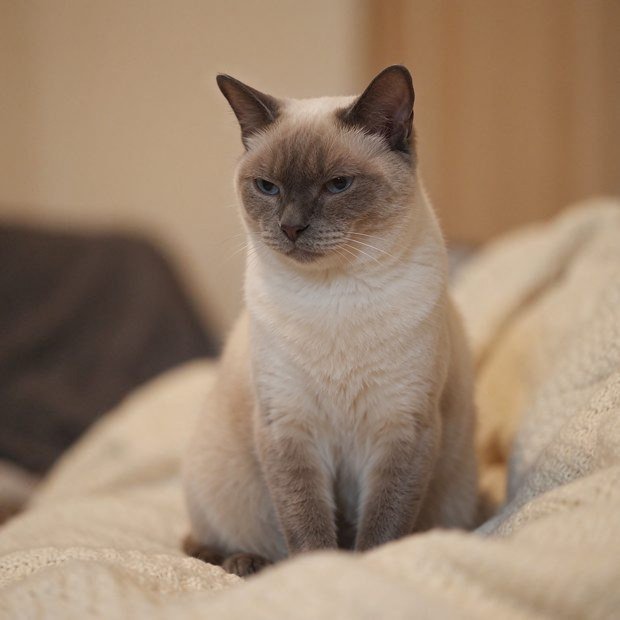
Never rub a cat’s nose in urine, shout at it or lock it away from the household. Punishment does not teach the box; it teaches the cat that the owner is unpredictable and that urinating near the box is dangerous. That makes the problem worse.
Clean soiled spots with an enzymatic cleaner, not a detergent that leaves an ammonia smell. Confine the cat to a small, safe area with a clean box and food at opposite ends for a few days if the pattern is recent, then expand access gradually. Reward calm use of the box with a treat or play, not with a lecture.
If the behaviour continues after a medical check and a full box reset, ask for a behavioural referral. Feline elimination problems are one of the most common reasons cats are surrendered, and they are often solvable with a structured plan.
SOURCES & REVIEW
- AAFP and ISFM Feline Environmental Needs Guidelines (PDF) — American Association of Feline Practitioners (AAFP) and ISFM.
- AAFP/ISFM Guidelines for Diagnosing and Solving House-Soiling Behavior in Cats (PDF) — American Association of Feline Practitioners (AAFP) and ISFM.
- Feline Behavior Problems: House Soiling — Cornell University College of Veterinary Medicine, Cornell Feline Health Center.
- Urethral Obstruction in Small Animals — Merck Veterinary Manual.
Educational information, not a diagnosis or treatment plan. If your pet is unwell, contact a licensed veterinarian; for an emergency, call the nearest emergency clinic.