
Reptile care: gradients, not single numbers
A care sheet that says “30 °C” describes one point in a terrarium. What the animal actually regulates is the range between the basking spot and the cool side — and the humidity swing behind it.
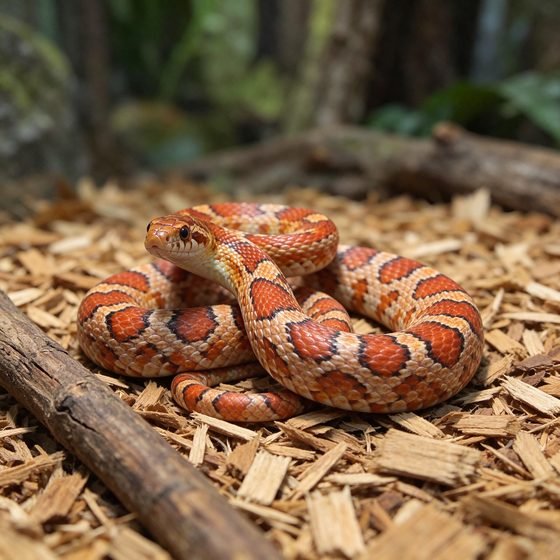
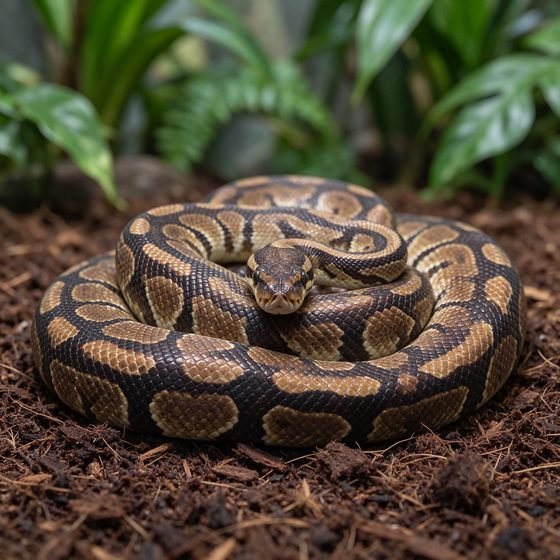
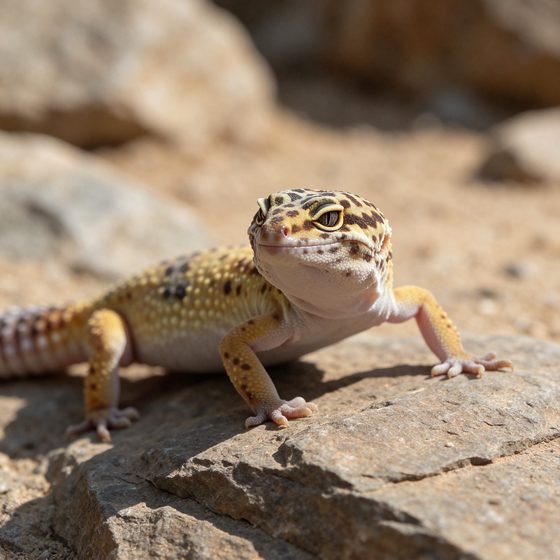
| Species | Adult size | Minimum enclosure | Basking surface | Cool side | Humidity | Feeding |
|---|---|---|---|---|---|---|
| Ball python | 90–120 cm | 120 × 60 × 60 cm | 30–32 °C | 22–27 °C | 60–80% (70–85% in shed) | Every 7–14 days |
| Corn snake | 100–140 cm | 120 × 60 × 60 cm | 32–33 °C | 24–27 °C | 65–75% | Every 7–10 days |
| Leopard gecko | 20–25 cm | 90 × 45 × 45 cm | 34–36 °C | 21–25 °C | 30–40% (70–80% humid hide) | Insects 2–3× weekly |
| Bearded dragon | 45–60 cm | 180 × 60 × 60 cm | 42–45 °C | 25–29 °C | 30–60% | Daily greens + insects |
Temperature is a gradient you build
Three readings matter: the basking surface, the cool-side floor, and the ambient middle. A thermostat on the heat source holds the hot end steady; the cool end is set by enclosure length and ventilation, not by a second heater. If the room sits at 22 °C, a 90 cm enclosure can usually hold a 30 °C hot spot and a 25 °C cool side without a second device.
Measure the basking spot with an infrared thermometer or a probe touching the surface — an air probe hanging mid-tank will read several degrees below what the animal actually feels.
Humidity is a gradient too
Printed humidity numbers describe the average. Real enclosures run wetter near the water bowl and substrate, drier under the lamp. For a shedding snake, the useful target is a damp hide or moss box at 70–85% plus an overall band of 60–80%, not a single misting that spikes to 95% for ten minutes and dries out by lunchtime.
Hygrometers belong at both ends, at the height the animal uses them. A 5% gap between two cheap units is normal; a 20% gap means one of them is wrong.
Light, UVB and night
Diurnal species — bearded dragons, most geckos kept under UVB — need UVB through a mesh or without glass between the tube and the animal, replaced every 6–12 months because output fades before the bulb visibly dies. Nocturnal species such as ball pythons can run on a light cycle without UVB, but a low-output tube does no harm and is increasingly recommended.
Night temperature should drop a few degrees, not stay at daytime basking levels. A 2–4 °C drop is normal; a heat mat left on 24/7 is not.
Feeding rules worth keeping
- Prey size for snakes: roughly the widest part of the snake’s body, not the largest item it will swallow.
- Insects should be gut-loaded and dusted with calcium; growing geckos and dragons need dusting two to three times weekly.
- Refusing food in winter is common for males and can be normal — but weight should be tracked weekly, not guessed.
- Water bowls large enough to raise local humidity; change daily, scrub twice weekly.
Health watch: four signals
- Stuck shed on toes, tail tip or eye caps — check after every shed, not weeks later.
- Open-mouth breathing, mucus or clicking — respiratory infection moves fast in a warm box.
- Rubber jaw, tremors, poor grip — metabolic bone disease from missing UVB or calcium.
- Regurgitation within 48 hours of feeding — usually temperature, prey size or handling.