IN SHORT
- RER = 70 × kg0.75. A neutered adult usually starts near 1.6 × RER.
- A 12 kg dog lands around 722 kcal; at 3,600 kcal/kg that is about 200 g of kibble, not two arbitrary cups.
- Keep treats under 10% of daily calories, and reassess every two weeks using ribs and waist.
Contact a veterinarian if your dog refuses food for more than 24 hours, loses weight quickly, vomits repeatedly, has diarrhoea, cannot keep water down, or appears weak or painful.
1. Why the feeding chart on the bag is so wide
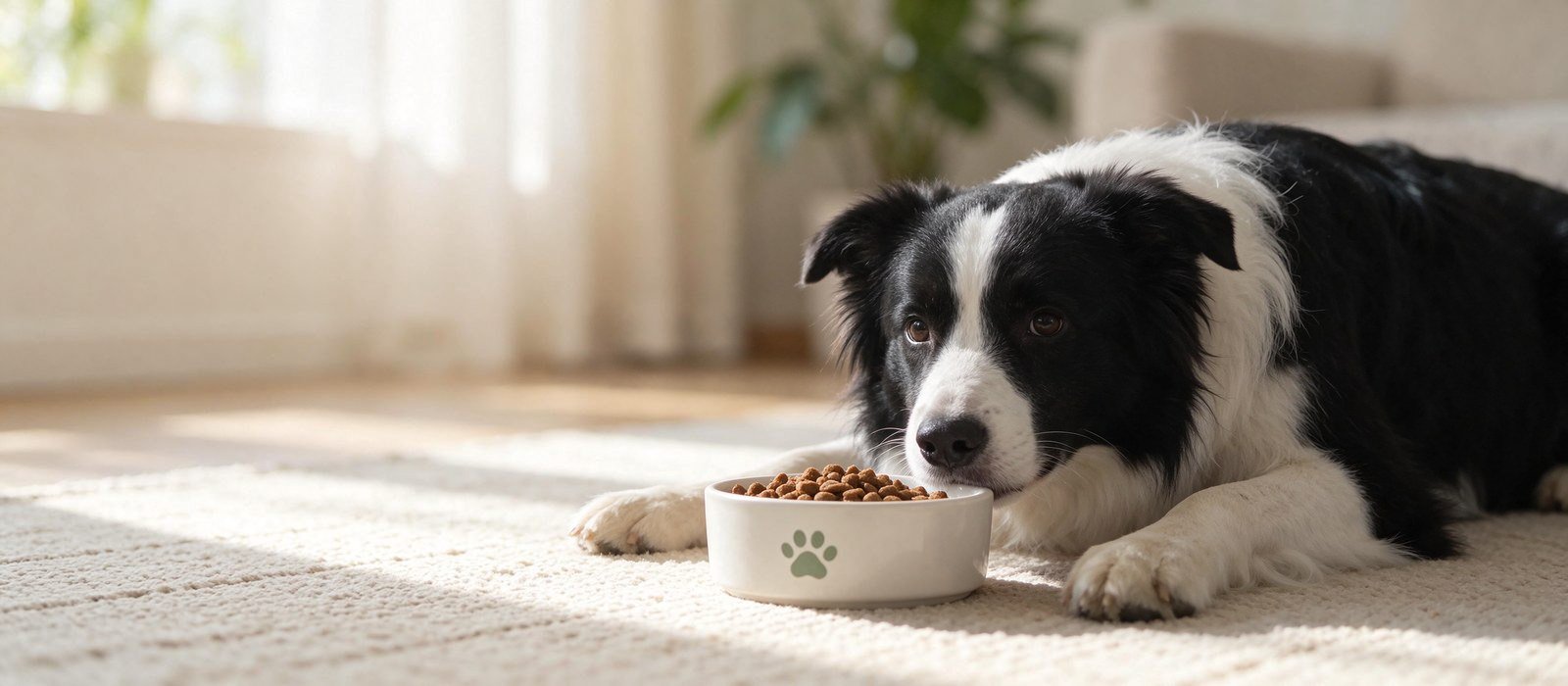
One kibble has to cover a 4 kg lap dog that walks ten minutes a day and a 30 kg sporting dog that trains for an hour. That is why the bag prints a range, often spanning 30–50% more food at the same weight. The range is honest, but it cannot tell you where your dog belongs inside it.
The other problem is the cup. A “cup” is a volume, and kibble density varies by shape and brand. Two cups of one food can weigh 150 g; two cups of another can weigh 230 g. Weigh the food in grams, or use the calorie figure on the label. Those are the only numbers that transfer between products.
2. Calculate resting energy first
Resting energy requirement (RER) is the energy a dog uses at rest. The standard estimate is:
RER = 70 × (body weight in kg)0.75
For a 12 kg dog, 120.75 ≈ 6.45, so RER ≈ 451 kcal. For a 25 kg dog, 250.75 ≈ 11.18, so RER ≈ 783 kcal. This is the floor, not the daily target.
3. Apply the life-stage multiplier
| Situation | Starting multiplier | 12 kg example |
|---|---|---|
| Neutered adult, indoor | 1.6 × RER | ≈ 722 kcal |
| Intact adult | 1.8 × RER | ≈ 812 kcal |
| Senior, low activity | 1.4 × RER | ≈ 632 kcal |
| Weight-loss plan | 1.0 × RER | ≈ 451 kcal |
| Puppy under 4 months | 2.5–3.0 × RER | scale to current weight |
| Puppy 4–12 months | 2.0 × RER | scale to current weight |
| Very active or working | 2.0–3.0 × RER | individual assessment |
These multipliers are starting points, not precision instruments. A dog that hikes every weekend will sit above the neutered-adult line; a dog recovering from surgery will sit below it. Puppies should be fed a complete growth diet and judged against a growth chart, not a single adult calorie target.
4. Turn calories into grams
Find the metabolisable energy on the label, usually written as kcal/kg or kcal/100 g. If the food contains 3,600 kcal per kg:
- 722 kcal ÷ 3,600 × 1,000 ≈ 200 g per day for the 12 kg neutered adult.
- 1,252 kcal ÷ 3,600 × 1,000 ≈ 348 g per day for a 25 kg dog at 1.6 × RER.
If the label only gives kcal/100 g, multiply by ten to get kcal/kg. If it gives a cup weight, weigh one cup once and use that as your conversion. Do not stack a scoop on top of the calculated portion — that is how a 10% surplus becomes a kilogram over a season.
5. Meals, treats and the 10% rule
Most adult dogs do well on two meals a day. Puppies under about six months usually need three or four smaller meals, then can move to two. Split the daily calories across the meals rather than feeding one large portion; a single big meal is harder on the stomach and offers no advantage.
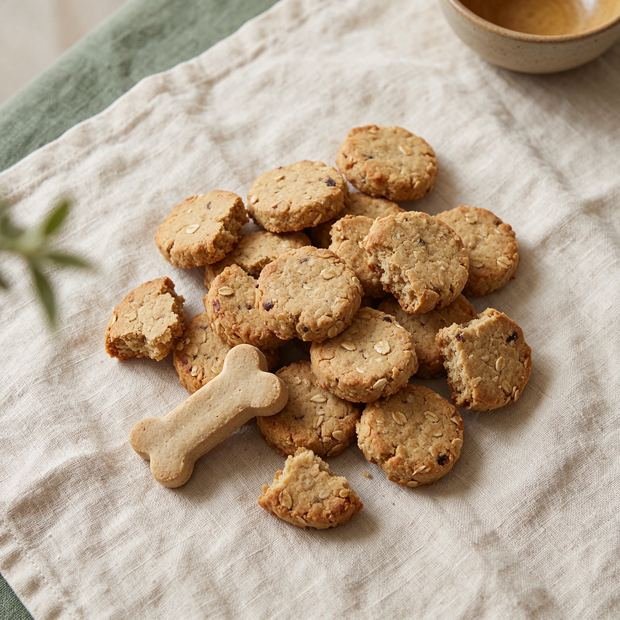
Treats, chews, dental sticks and table scraps all count. Keep them under roughly 10% of daily calories. For the 12 kg dog at 722 kcal, that is about 72 kcal of extras — one medium biscuit plus a few small pieces, not a biscuit after every walk. If training needs many rewards, break treats into pea-sized pieces or use part of the daily kibble as the reward.
If you mix wet and dry food, calculate the total from both. Wet food is mostly water, so 100 g of wet food is not equivalent to 100 g of dry kibble. Add the calories, then check the total against the target.
6. Use body condition, not behaviour, to adjust
A dog that cleans the bowl is not necessarily underfed. Begging is a routine, and free-fed dogs beg too. The reliable check is hands-on:
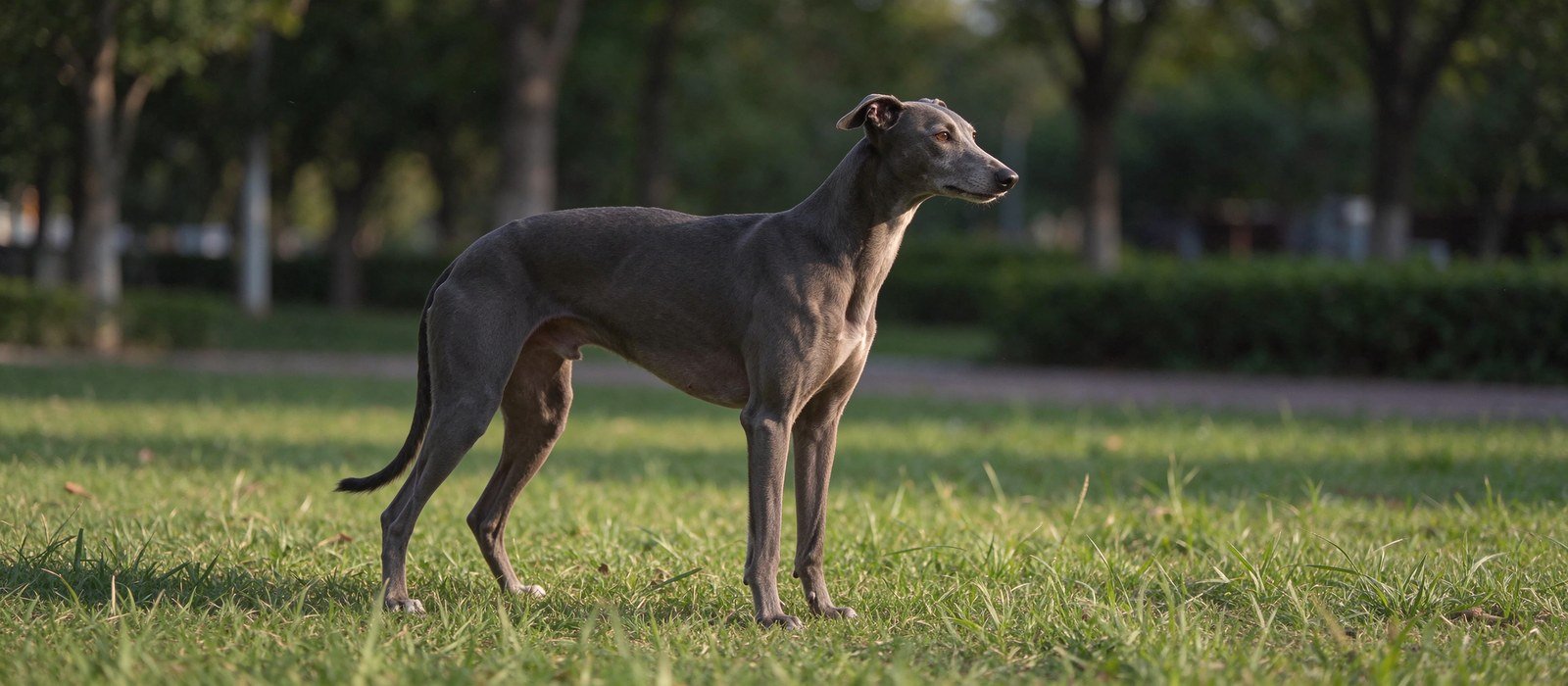
- Ribs. Easy to feel under a thin layer of fat, but not visible when the dog stands.
- Waist. A visible tuck behind the rib cage when viewed from above.
- Belly. A gentle upward line from the rib cage to the hind legs, not a flat or sagging underside.
- Weight trend. Weigh monthly on the same scale. A 5% change in a month is a reason to revisit the portion.
Recheck every two weeks. If the dog is gaining, cut the daily portion by about 10% and keep the treats fixed. If it is losing condition, add 10% and rule out illness before assuming the food is too little. Slow change beats dramatic restriction: aim for roughly 0.5–1% of body weight loss per week, and only under veterinary supervision for a dog that is already overweight.
7. Water, transitions and when to ask
Fresh water should be available at all times, including during meals. If you change food, transition over seven days: 25% new food for two days, 50% for two, 75% for two, then all new. A sudden switch is a common cause of loose stool that gets blamed on the new brand.
Contact a veterinarian if a dog refuses food for more than 24 hours, loses weight despite a normal appetite, vomits repeatedly, has diarrhoea for more than two days, or shows pain when handled. Portion questions are normal; those signs are not.
SOURCES & REVIEW
- 2021 AAHA Nutrition and Weight Management Guidelines for Dogs and Cats — American Animal Hospital Association (AAHA).
- Nutritional Requirements of Small Animals — Merck Veterinary Manual.
- Feeding Practices in Small Animals — Merck Veterinary Manual.
- 2019 AAHA Canine Life Stage Guidelines (PDF) — American Animal Hospital Association (AAHA).
Educational information, not a diagnosis or treatment plan. If your pet is unwell, contact a licensed veterinarian; for an emergency, call the nearest emergency clinic.