Lizards: light, calcium and a hot spot they can leave
Leopard geckos and bearded dragons both need a temperature gradient, but only one of them needs strong UVB. Getting that wrong is the difference between a thriving animal and one that slowly loses bone density.
| Species | Adult size | Minimum enclosure | Basking surface | Cool side | Humidity | Feeding |
|---|---|---|---|---|---|---|
| Leopard gecko | 20–25 cm | 90 × 45 × 45 cm | 34–36 °C | 21–25 °C | 30–40% · 70–80% humid hide | Insects 2–3× weekly |
| Bearded dragon | 45–60 cm | 180 × 60 × 60 cm | 42–45 °C | 25–29 °C | 30–60% | Daily greens + insects |
Heat first, then light
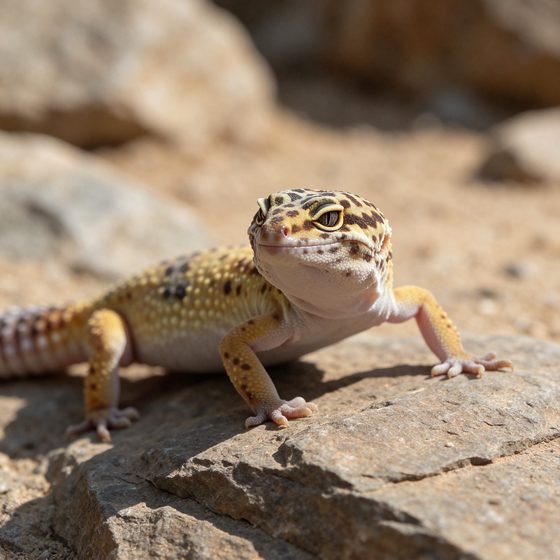
Bearded dragons are diurnal baskers: they need a 42–45 °C surface hot spot plus a 25–29 °C cool side to retreat to, and all heat and lights off at night. Leopard geckos are crepuscular: a 34–36 °C basking surface, a 21–25 °C cool end and a 30–40% ambient humidity, with a separate humid hide at 70–80% for shedding.
Measure the surface the animal sits on, not the air at the top of the tank. Both species thermoregulate by contact, so a correct air reading with a cold rock is still a cold lizard.
How the table was measured. Basking is the surface temperature of the rock or warm-hide floor under the heat source, read with an infrared temp gun after the lamp has run for at least an hour; cool side is air at the far end, read with a digital probe; humidity is ambient air at the cool end, with a separate reading inside the humid hide. These are typical adult reference bands, not universal prescriptions. Juveniles, gravid females, enclosure size, substrate, ventilation and room conditions can move the right number; treat them as a starting point and confirm changes with an exotic-pet veterinarian.
UVB and calcium, matched to the species
Bearded dragons need UVB through mesh or without glass between tube and animal, replaced every 6–12 months because output fades before the bulb visibly dies. Leopard geckos are nocturnal and many keepers run them without UVB when calcium and D3 are carefully managed; a low-output tube is an option, but UVB and a D3 supplement together can oversupply vitamin D3. The choice depends on the animal, the supplement and the measured UVI, so treat it as a plan to confirm with an exotic-pet veterinarian rather than a default.
Dust insects with calcium two to three times weekly for growing animals; add D3 only if there is no UVB. Rubber jaw, tremors and poor grip are late signs of missing calcium or UVB — by then the bone density is already gone.
Feeding without guesswork
- Insects should be gut-loaded and no wider than the space between the lizard’s eyes.
- Greens for dragons daily: collards, dandelion, squash; fruit only as a treat.
- Adults eat less often than juveniles — daily insects for babies, every other day for adults.
- Water in a shallow bowl, changed daily; geckos often drink from misted surfaces instead.
Health watch: four signals
- Stuck shed on toes and tail tip — soak and check the same day.
- Sunken tail or hip bones — weight loss before appetite loss.
- Tremors, jaw softening, poor grip — metabolic bone disease.
- Lethargy plus cool skin — check the thermostat before assuming illness.
SOURCES & REVIEW
- Leopard Gecko Lighting, Temperature & Humidity — ReptiFiles.
- Bearded Dragon Lighting, Heating & Humidity Requirements — ReptiFiles.
- Management and Husbandry of Reptiles — Merck Veterinary Manual.