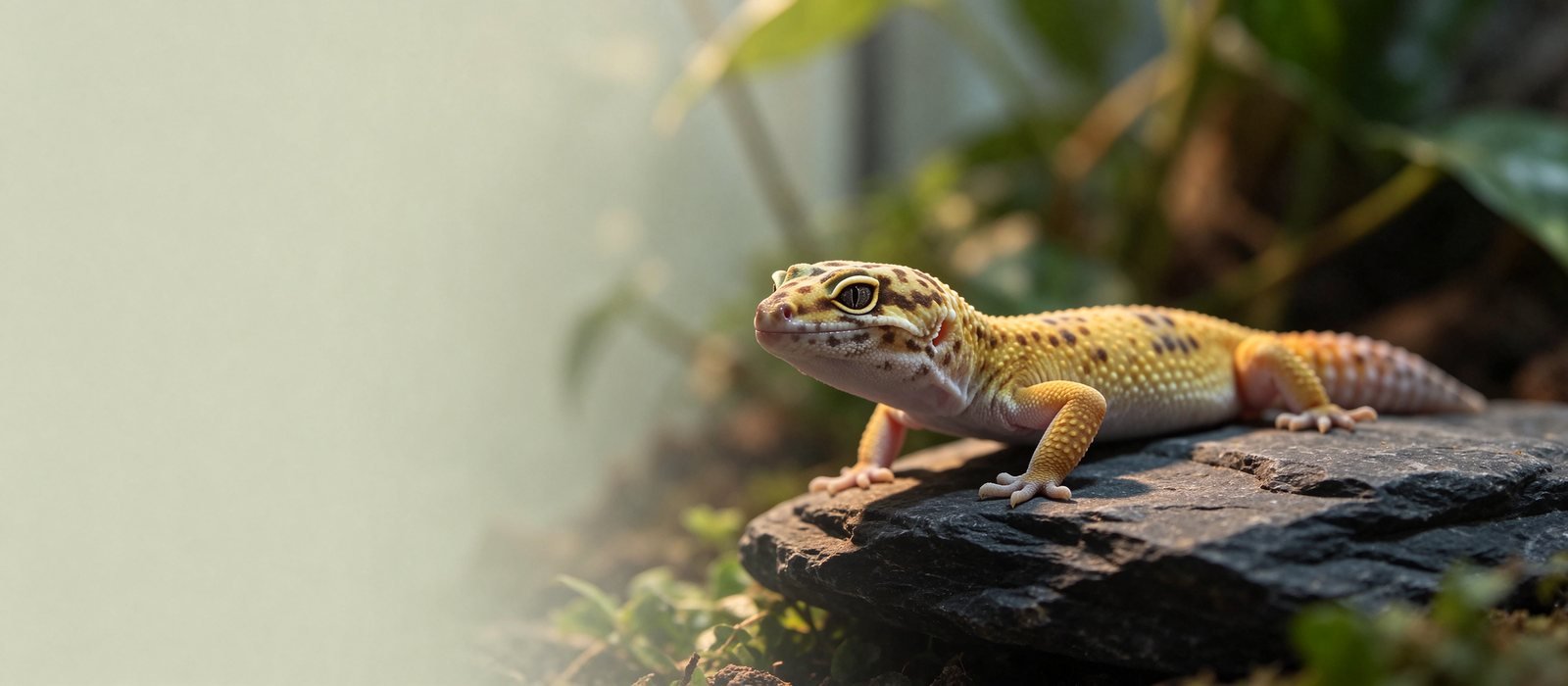
Leopard gecko resting on a slate rock in a planted terrarium
Temperature & humidity tracker

Environment
Monitor

Record the basking, cool-end, humidity and UVB readings your reptile actually lives in. Compare each one with its species band, catch drift early, and keep a history you can export.

Manual-first readings Threshold alerts 1h–7d history
Manual-first · local only
The right environment.A healthier reptile.

Current Conditions

No reptile selected

No profile Add a reptile to begin
Basking Spot
—°C
No readingTarget —
Cool End
—°C
No readingTarget —
Humidity
—% RH
No readingTarget —
UVB
—UVI
No readingTarget —

No profile yet. Add a reptile above, then use “Log reading” to record the first real measurement.

Temperature & Humidity Trend

Add a reptile and log a reading to start the curve

Line chart of basking spot, cool end temperature and humidity readings.
Basking spot Cool end Humidity Shaded areas mark species target bands

Alerts & Notifications

    Recent History

    TimeBaskingCoolHumidityStatus
    Manual-first by design.

    This page does not connect to a sensor. Every curve is built from readings you enter manually; no sample readings are loaded. Reference bands are compiled from ReptiFiles species guides for a healthy adult setup and are not universal care standards. ReptiFiles lists corn-snake humidity as both 40–60% (quick facts) and 65–75% (detailed chapter); this page uses the detailed chapter. Calibrate a digital probe and use a Solarmeter 6.5 for UVB before acting on any number. Adult bearded dragon enclosure guidance follows the 6×2×2 ft welfare-preferred minimum.

    Method & sources

    How this tool works

    This is a manual logbook, not a live sensor dashboard. Every chart point comes from an entry you save; no sample readings are generated. Species bands come from the ReptiFiles guides below and describe a healthy adult setup. ReptiFiles' corn-snake quick-facts card lists 40–60% humidity while its detailed chapter recommends 65–75%; the band here follows the detailed chapter. Calibrate a digital probe and measure UVB with a Solarmeter 6.5 before changing heat or lighting.

    Content & review

    Author: MYKAVRA editorial team  ·  Last checked: 25 November 2026.

    Internal parameter review against the sources below. No named clinician review is claimed.

    Educational planning only. It does not replace a veterinary exam, a calibrated measurement or the instructions on your product label.